Short answer: you level a floor when the subfloor has dips, cracks, adhesive residue or height differences. Under a glued-down PVC (vinyl) floor it is always needed. In 2026 a professional in the Netherlands usually charges € 22–32 per m² for the labour. Levelling compound and primer for a 3 mm layer cost about € 6 per m² together. After 24–72 hours the new floor can go down.
When does a floor need levelling?
A new floor is only as flat as the surface underneath it. Every unevenness shows through after a few weeks, especially with thin PVC flooring. Levelling is needed if you see any of the following:
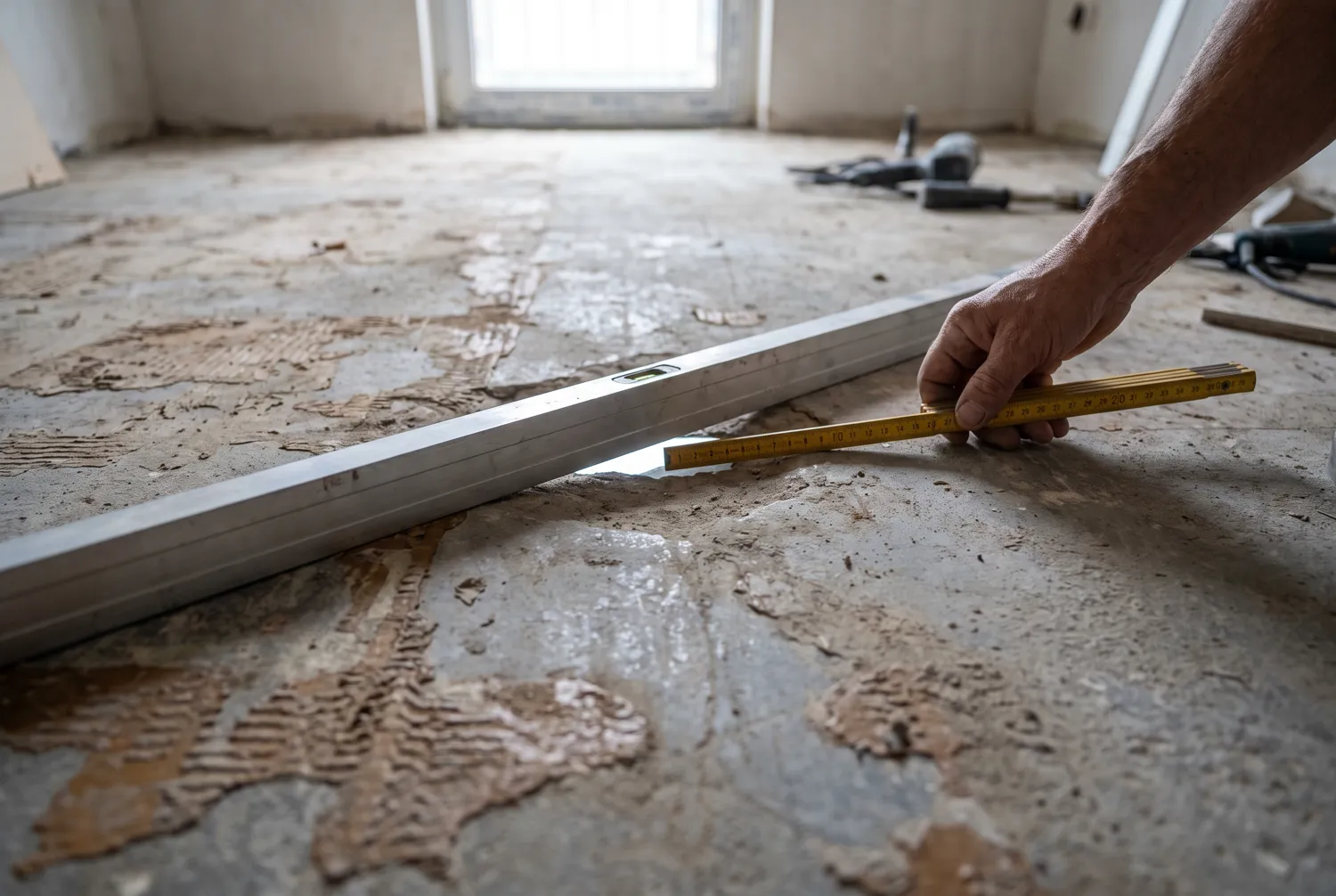
- Dips and height differences. Lay a straight 2-metre rule on the floor. If light shows underneath or the rule rocks, the floor is not flat enough.
- Cracks and damage in the screed.
- Adhesive residue from an old floor or carpet.
- A rough or sandy surface. If you can scratch grit loose with a screwdriver, the subfloor needs to be strengthened first.
- A soft floor covering. Bostik, a manufacturer of levelling compound and floor adhesive, advises always levelling the screed under soft floors such as glued PVC and vinyl.
With laminate and click PVC, the underlay absorbs small irregularities. Larger height differences still have to go. Check the manufacturer's installation guide for how many millimetres of deviation are allowed.
Levelling compound, poured floor or new screed?
Which layer you need depends on how big the height difference is.
| Height difference | Solution | Typical layer thickness |
|---|---|---|
| Small irregularities | Levelling compound as the last layer under the floor | 2–3 mm |
| Up to about 10 mm | Standard levelling compound, possibly in two layers | 3–10 mm |
| 10 to 40 mm | Special compound for thick layers, or a gypsum-based floor | 10–40 mm |
| More than 40 mm | New cement screed | 40 mm and more |
A cement screed needs about 28 days to cure fully. Plan for that time before the new floor can go on top.
How floor levelling works, step by step
- Check the subfloor. Measure moisture, do a scratch test, remove loose parts and adhesive residue. The screed must be dry enough: a cement screed at most 2.0 CM% (1.8 CM% with underfloor heating), an anhydrite screed at most 0.5 CM% (0.3 CM% with underfloor heating).
- Sand and vacuum. Dust and grease stop the compound from bonding.
- Apply primer. Primer stops the subfloor from absorbing water, so the compound does not dry too fast or come loose. A highly absorbent floor gets a special bonding primer.
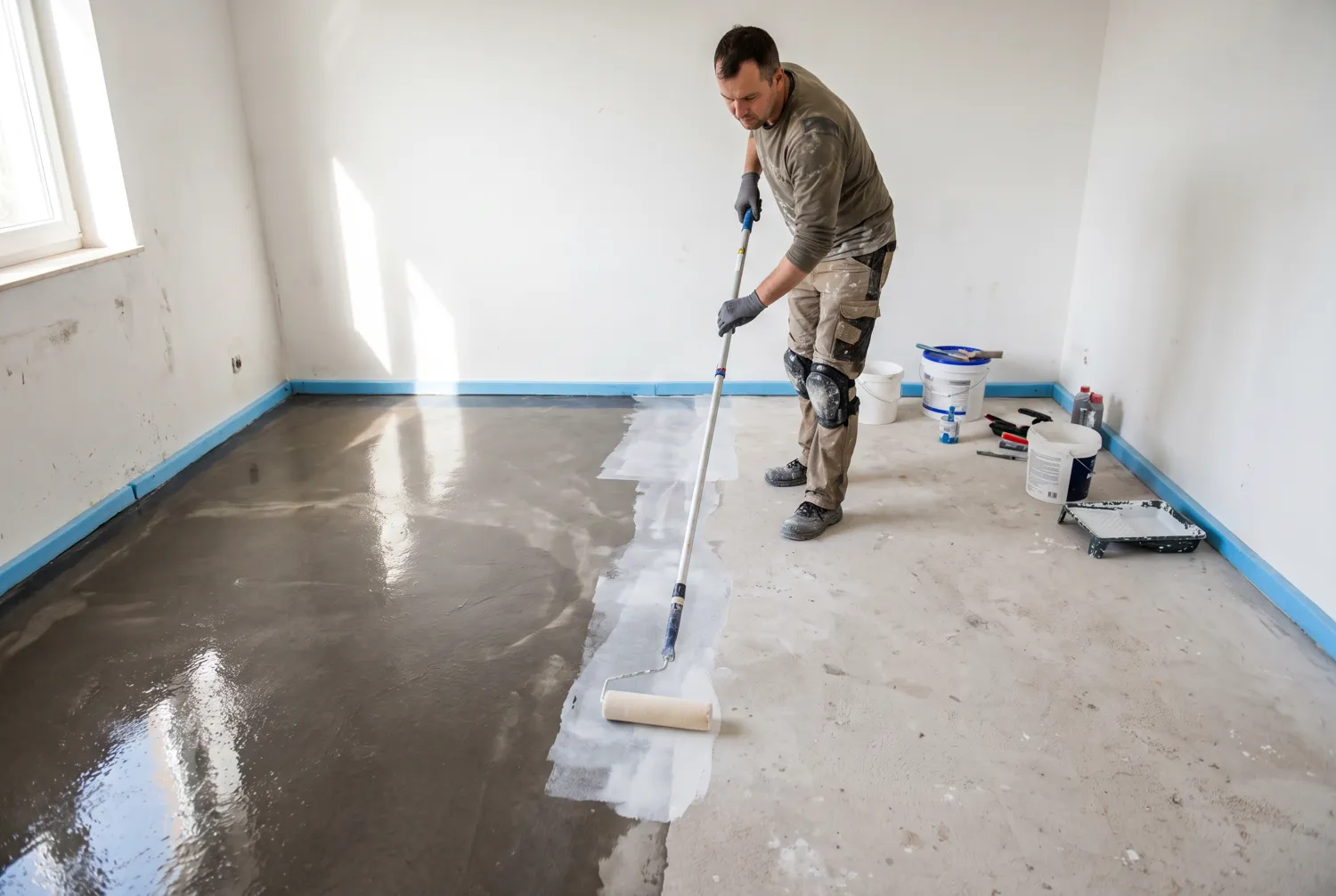
- Tape the edges. Edge strip goes along the walls, so the compound cannot run away and the floor can move.
- Mix the compound. Exactly as the product sheet says: for example 6 litres of water per 25 kg bag. Too much water makes the layer weak.
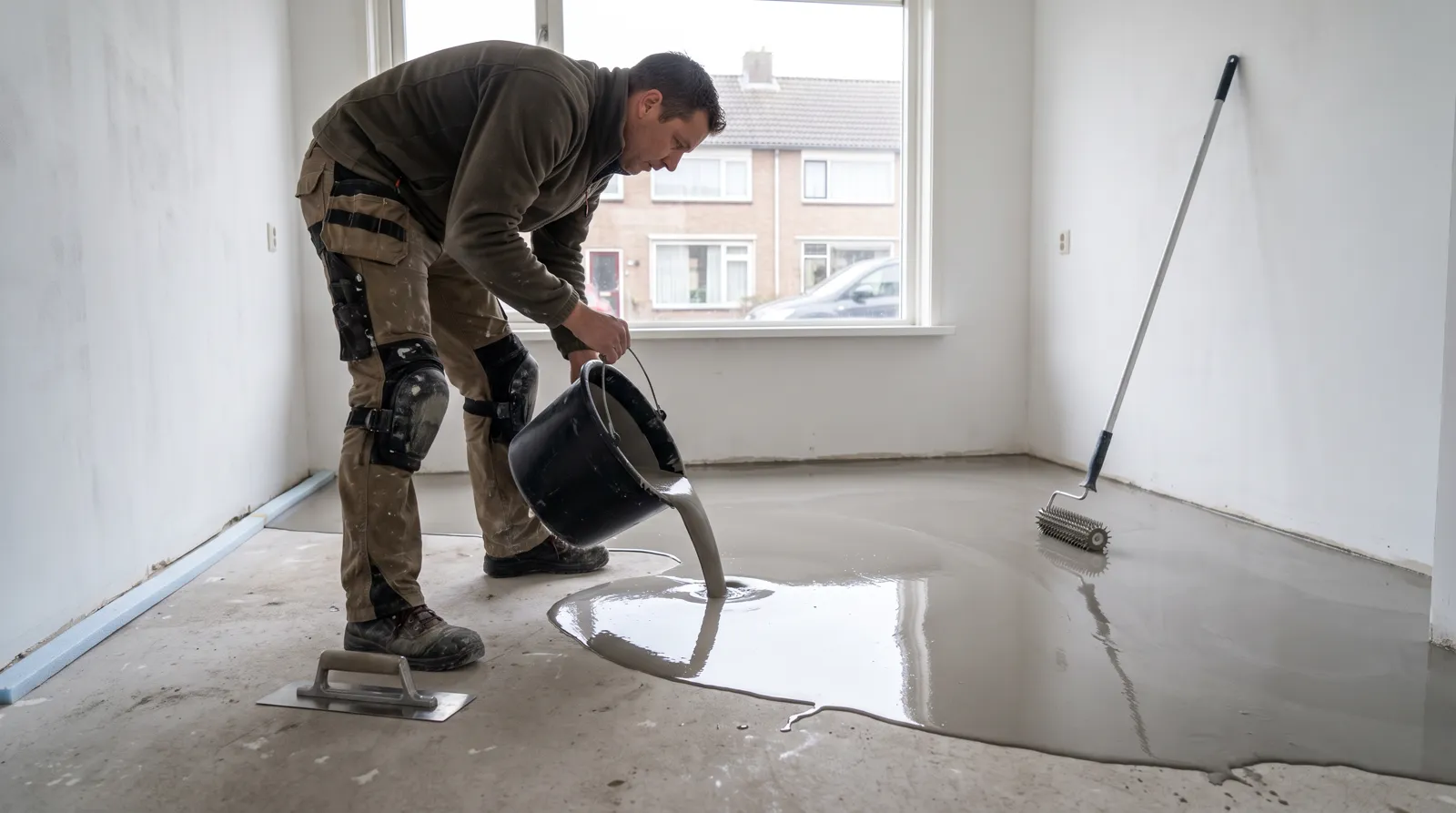
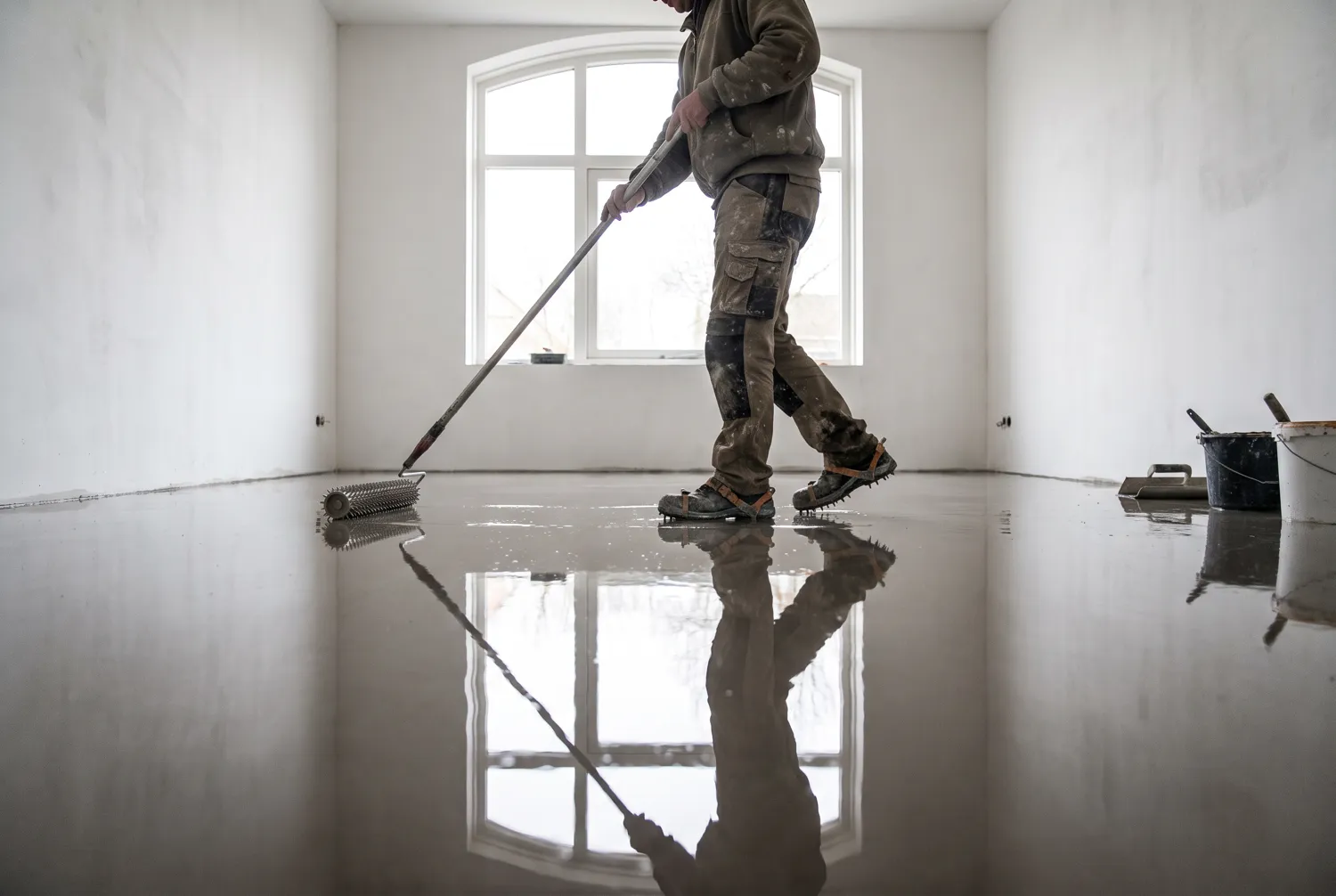
- Pour and spread. The compound is poured in strips and spread with a trowel. A spiked roller removes the air bubbles. This has to be quick: the compound stays workable for about 25 minutes.
- Let it dry. Keep windows closed, avoid draughts and direct sunlight.
Need a second layer and the first one is already dry? Prime again first.
How long does levelling compound take to dry?
Drying time depends on the product, the layer thickness and the temperature. For a typical cement-based levelling compound:
- Conditions: floor warmer than 15 °C, air warmer than 18 °C, humidity below 75%.
What does floor levelling cost?
Market prices per m², excl. VAT, for a living room or bedroom with a normal subfloor:
| Item | Price | Source |
|---|---|---|
| Labour, professional | €22 per m² | RekenmachinePro, April 2026 |
| Labour incl. sanding and vacuuming | €32 per m² | RekenmachinePro, April 2026 |
| Levelling compound | ±€1.20 per m² per mm | RekenmachinePro, April 2026 |
| Primer | €2.50 per m² | RekenmachinePro, April 2026 |
| Call-out fee | around €85 | RekenmachinePro, April 2026 |
Flooring companies also advertise prices from €9.95 per m². Price comparison sites give a range of €10 to €75 per m², depending on layer thickness, the subfloor and what has to be removed first.
What does levelling cost for your room?
Estimate based on 2026 market prices (RekenmachinePro) and a consumption of 1.5 kg per m² per mm. Not a quote. At Badr Company, travel is included anywhere in the Netherlands.
Request a fixed priceWhat makes levelling more expensive?
- A thick layer, or two layers instead of one.
- Old adhesive, tiles or carpet that have to be removed first.
- A sandy or damp screed that needs treatment first.
- A small floor area: fixed costs weigh more heavily.
Levelling and flooring work are charged at 21% VAT. The low 9% rate only applies to painting and plastering in homes older than 2 years. Read the details in 9% or 21% VAT on a renovation.
Worked example: a 30 m² living room
A 30 m² living room with small irregularities gets a 3 mm layer of levelling compound under a new PVC floor:
| Item | Calculation | Amount |
|---|---|---|
| Labour | 30 m² × €22 | €660.00 |
| Primer | 30 m² × €2.50 | €75.00 |
| Levelling compound | 30 m² × 3 mm × €1.20 | €108.00 |
| Total excl. VAT | €843.00 | |
| VAT 21% | €177.03 | |
| Total incl. VAT | €1,020.03 |
Level it yourself or hire a pro?
DIY levelling is possible in a small room with a good, dry subfloor. You save on labour. The risk lies in three things:
- Speed. The compound stays workable for about 25 minutes. In a 30 m² living room you have to mix and pour six bags back to back. That is almost impossible on your own.
- Water ratio. Too much water gives a weak layer with hairline cracks; too little and it will not flow flat.
- Subfloor. You cannot always spot a damp or sandy screed with the naked eye. Mistakes only show once the new floor is down.
A failed layer has to be sanded off or poured again, which costs more than having it done right the first time. So hire a pro for large rooms, for height differences of more than a few millimetres and under a glued PVC floor.
Levelling before a PVC floor
PVC is thin and soft, so every unevenness becomes visible. For a glued PVC floor:
- levelling is always needed, even if the floor looks flat;
- the compound layer must be completely dry before the adhesive goes on;
- with underfloor heating, stricter moisture limits apply: 1.8 CM% for cement, 0.3 CM% for anhydrite.
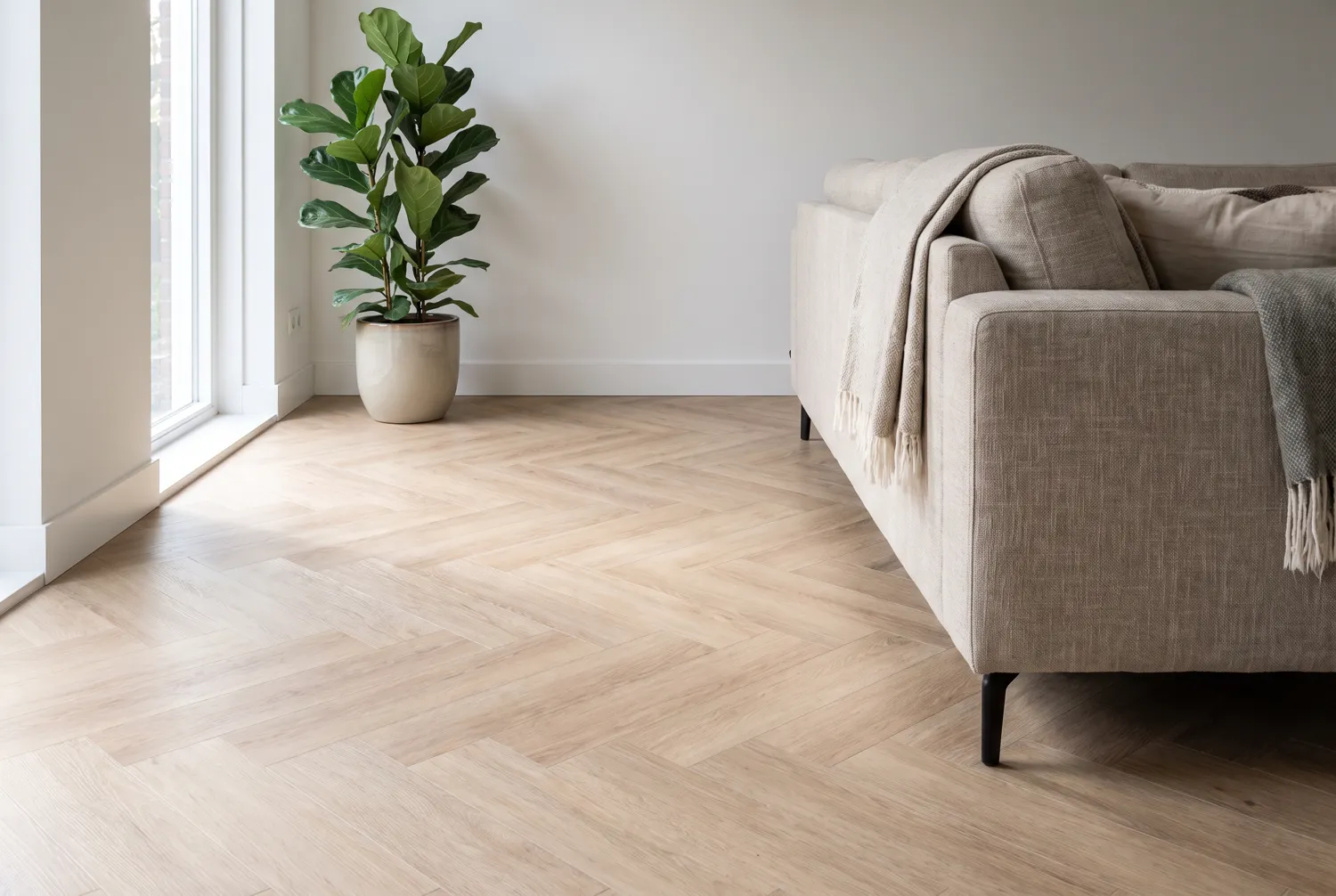
At Badr Company we level the subfloor and lay the PVC floor in one job. That way one tradesman is responsible for the end result, from subfloor to skirting board. Read more about our flooring work on the Flooring page.
Frequently asked questions
How many mm can you level in one go?
Standard levelling compound goes up to about 10 mm. Special compound can do 30–40 mm. If the difference is bigger, you need a new screed.
Do you always need to prime before levelling?
Yes. Without primer the subfloor sucks the water out of the compound. The layer then dries too fast, cracks and bonds poorly.
Can you level over tiles?
Yes, if the tiles are firmly fixed. Loose tiles must be removed first. On glazed tiles you use a primer for non-absorbent surfaces.
When can I lay PVC after levelling?
For a layer up to 3 mm, after about 24 hours. For a thicker layer, after 48–72 hours. Always check the product sheet of the compound.
Is levelling needed under laminate?
Not always. The underlay absorbs small irregularities. Height differences larger than the laminate manufacturer allows must be removed.
Sources
- Co-pro, product sheet Cement-based levelling compound (C): consumption, drying times, working conditions.
- Bostik Benelux, white paper Guidelines for levelling (2023): residual moisture in CM%, primers, layer thicknesses.
- RekenmachinePro, Floor levelling costs 2026 (updated 17 April 2026): market prices.
- Trustoo, Floor installation costs (updated 7 September 2026): price range.
- Vloerenconcurrent, How thick is a levelling layer (updated 13 October 2026): layer thicknesses.


